July.17,2026
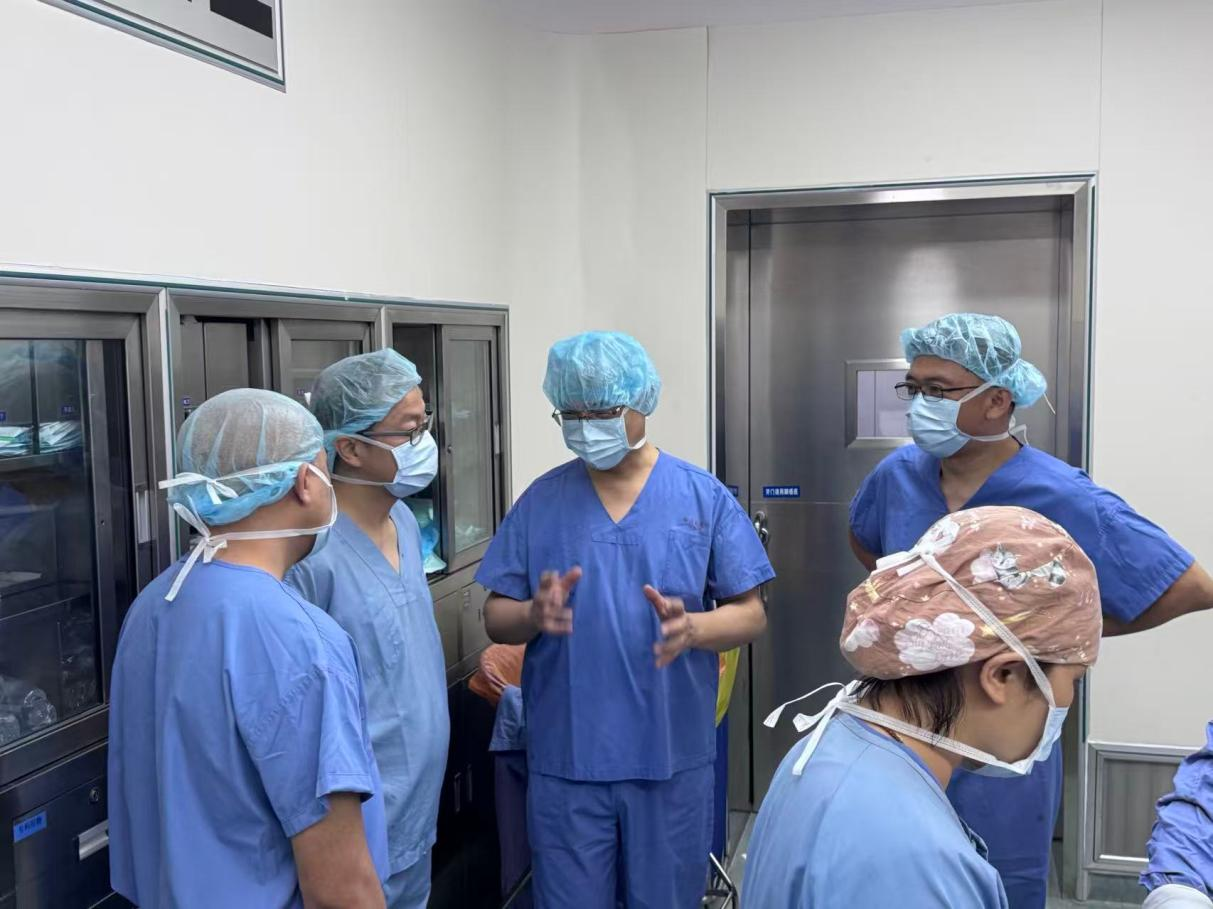
Robotic-Assisted Joint Replacement Surgery: Indonesian Experts Fly to Hangzhou for an Observation Visit
Read More→


 December.16,2025

On December 5th, the first clinical-grade pan-pathological AI model for lung cancer—the SRRSH LungPanor Model—was unveiled. This model is a collaborative creation of Sir Run Run Shaw Hospital (SRRSH), affiliated with Zhejiang University School of Medicine, the College of Biomedical Engineering & Instrument Science of Zhejiang University, and Hangzhou Yice Technology Co., Ltd.
"It can assist physicians in making more precise pathological diagnoses and improve both efficiency and accuracy, thereby enabling personalized treatment for patients," said Dr. JIANG Zhinong, Director of the Pathology Department at SRRSH.
Lung cancer ranks first in both incidence and mortality among all cancers. In its diagnosis and treatment, pathological diagnosis serves as the “gold standard.” However, the traditional diagnostic model faces several challenges: imaging, pathology, immunohistochemistry (IHC), and molecular testing data are often generated independently by different departments and systems. Manual data integration can lead to a prolonged diagnostic process and inconsistent interpretations. Furthermore, molecular testing is typically time-consuming, usually taking 5 to 7 days, which may delay critical treatment decisions in time-sensitive clinical scenarios, potentially affecting the treatment window.
"We focused on clinical needs to develop and release this pan-pathological AI model for lung cancer," stated Dr. Jiang Zhinong. The core features of this model are its "comprehensive scope, specialized focus, and holistic integration." It aggregates multi-modal medical data—including pathology, imaging, molecular, and genetic information—enabling collaborative learning of different data modalities within a unified system.
This model enhances diagnostic consistency. A unified view can reduce discrepancies arising from data misalignment across different departments while significantly shortening decision-making time.
"Leveraging this model, the entire process of lung cancer lesion identification and typing can be completed in just a few seconds," noted Dr. Jiang Zhinong. Beyond speed, it improves diagnostic sensitivity and precision. For instance, minute nodules indicated by imaging can be rapidly localized and verified in pathological images. Molecular prediction models can offer early references for direction in therapy. "It aids in formulating personalized treatment plans for patients—whether to choose chemotherapy, targeted therapy, immunotherapy, or combination therapy. It establishes an end-to-end intelligent support system, from diagnosis, typing, and treatment decision-making to prognostic assessment (such as 5-year recurrence risk prediction), thereby breaking down diagnostic silos."
In the field of pathology, this model brings tangible improvements: First, it enhances consistency in subtype determination (e.g., adenocarcinoma subclassification) and grading, reducing interpretation variability. Second, it enables automated quantification and threshold suggestions for IHC technology, improving the accuracy of interpreting indicators like PD-L1. Third, it provides morphological predictions for certain common genes (e.g., EGFR/ALK), offering clues for genetic testing prior to molecular assays. Fourth, it intelligently suggests rare or challenging pathological phenotypes, aiding pathologists with diagnostic clues. These improvements directly alleviate the workload while enhancing report quality.
The interconnectivity of data and models also benefits primary care. "The Lung Cancer Pan-Pathological AI Model will facilitate networking across hospitals at different levels. Patients in local communities can access precise and rapid pathological identification services without needing to travel to higher-tier hospitals," emphasized Dr. Jiang Zhinong.
Currently, certain modules of this model are already in clinical trial use at SRRSH with diagnostic accuracy approaching the "gold standard." It is expected to be fully deployed within a year.
Mr. Xu Guobin, Chairman of the Council of SRRSH, remarked that the hospital pioneered the "Future Hospital" initiative in China in 2014, consistently building a smart healthcare system integrating "smart diagnosis and treatment, smart services, and smart management." Today, the hospital has established an AI application matrix covering multiple scenarios—from precise triage and intelligent diagnosis to telemedicine and full-cycle health management. These AI applications continuously expand the accessibility of medical services, extending high-quality resources to more people while consistently enhancing the precision and efficiency of diagnosis and treatment, thereby delivering a superior medical experience. The newly released Lung Cancer Pan-Pathological AI Model holds significant importance for improving the efficiency and precision of pathological diagnosis and for addressing the practical challenges in the precise diagnosis and treatment of lung cancer. Moving forward, the hospital will continue to explore the interdisciplinary integration of medicine, engineering, and information technology, striving to build a comprehensive medical ecosystem that integrates clinical practice, education, research, and industry. This commitment aims to promote the translation and sharing of medical AI technology, leading the industry toward high-quality development.