July.17,2026
Robotic-Assisted Joint Replacement Surgery: Indonesian Experts Fly to Hangzhou for an Observation Visit
Read More→


 May.25,2026
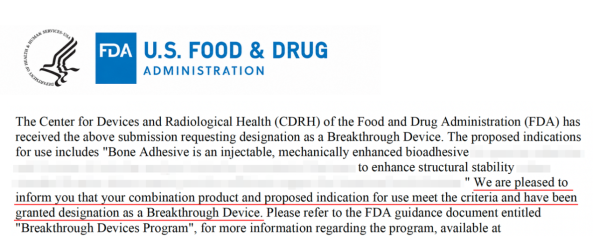
"Bone glue 'Bone 02' has been granted both the Innovative Medical Device Special Review Process by China's National Medical Products Administration (NMPA) and the Breakthrough Device Designation by the U.S. Food and Drug Administration (FDA). These recognitions underscore the innovation and significant clinical value of this original Chinese medical device, and marks a pivotal shift for China's high-end medical devices—from following global leaders to running alongside them, and even leading in certain areas. It greatly boosts the confidence of China's medical industry in pursuing original innovation and expanding globally." On May 21, at a press conference held at Sir Run Run Shaw Hospital (SRRSH), affiliated with Zhejiang University School of Medicine, Professor Cai Xiujun, an elected member of the Chinese Academy of Sciences and president of SRRSH, announced this major achievement.
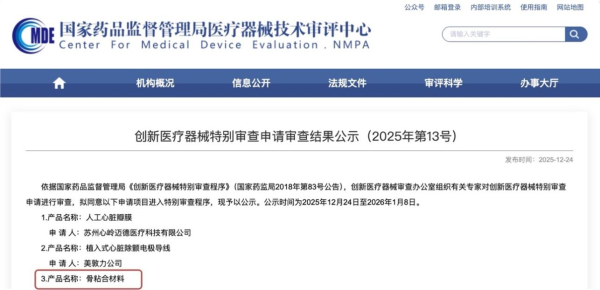
Last September, the original innovation "Bone 02" bone glue, developed by the orthopedic clinical team at SRRSH, first captured public attention with its disruptive concept of "gluing broken bones together." Demonstrating China's capacity for zero-to-one medical innovation, it quickly drew widespread attention from the global medical community. Just months later, the project reached key milestones: in January 2026, it entered NMPA's Innovative Medical Device Special Review Process, followed by FDA Breakthrough Device Designation in April.
Subject matter experts note that this marks the first time an original Chinese orthopedic device has received dual recognitions from both Chinese and U.S. regulatory authorities.
Solving a Century-Old Clinical Problem
The dream of "gluing broken bones" becomes reality
According to Professor Fan Shunwu, Director of the Department of Orthopedics at SRRSH, complex fractures such as comminuted fractures and fragility fractures in the elderly have long relied on metal internal fixation. These methods not only cause significant surgical trauma and require long recovery times but also carry risks of loosening and infection. The development of bone glue, a goal pursued by generations of orthopedic surgeons, has been hindered by two major technical barriers: lack of biosafety and weak adhesion in a blood-rich environment.
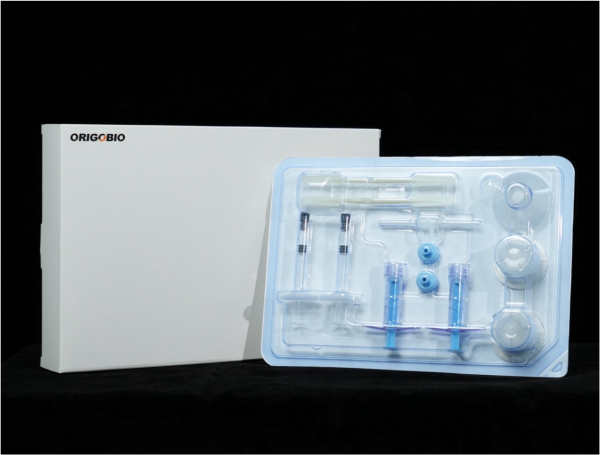
After a decade of research, the SRRSH orthopedic team overcame these core challenges, leading to the creation of "Bone 02." This product can rapidly bond bone fragments in a wet, in vivo environment with stable adhesive strength. Over time, it naturally degrades and is completely replaced by new bone growth. Fracture treatment is shifting from mechanical fixation to biological bonding.
Clinically Safe and Effective
Expanding from fracture treatment to spine and oral applications
Robust clinical data support the efficacy and safety of "Bone 02." To date, "Bone 02" has completed the world's first multicenter clinical study on bone glue for fracture treatment, involving over 150 randomized controlled trial (RCT) cases at several leading institutions, including the Second Affiliated Hospital, Zhejiang University School of Medicine, Shanghai Sixth People's Hospital Affiliated to Shanghai Jiao Tong University School of Medicine (National Orthopedics Medical Center), and the First Affiliated Hospital of the University of Science and Technology of China. All cases have successfully completed follow-up.
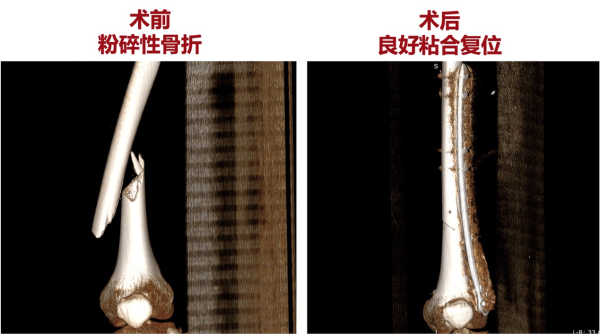
Results show that compared to control groups, "Bone 02" significantly reduces fracture displacement, shortens intraoperative fixation time by more than half, enhances surgical safety, promotes fracture healing, and shortens patient recovery periods.
The team is now expanding clinical applications by conducting clinical trials in spinal surgery and dental implant procedures.
For conventional lumbar fusion surgery, which requires multiple pedicle screws and results in extensive tissue dissection, bleeding, and surgical complications, "Bone 02" offers an innovative minimally invasive approach: using biological bonding instead of screw fixation to achieve stable fusion in the graft area. Preliminary results show that patients experience significantly reduced lower back symptoms, with fusion outcomes and long-term functional recovery superior to those of traditional methods.
For dental implant patients with insufficient alveolar bone volume that prevents immediate or one-stage implantation, "Bone 02" has shown excellent bone interface adhesion and in vivo osteogenic potential in preliminary exploratory studies.
Dr. Lin Xianfeng, Orthopedics Consultant at SRRSH and head of the "Bone 02" R&D team, stated that the dual designations place "Bone 02" on a fast track under the guidance and priority review of both Chinese and U.S. regulatory authorities. However, moving from innovation designation to patient access still requires overcoming several barriers, including scalable production, international multicenter clinical studies, and global market access. Moving forward, the team will leverage the platforms of Zhejiang University and SRRSH, working closely with NMPA and other relevant authorities, to accelerate clinical translation and market launch, ultimately benefiting fracture patients worldwide.