July.17,2026
Robotic-Assisted Joint Replacement Surgery: Indonesian Experts Fly to Hangzhou for an Observation Visit
Read More→


 July.10,2026
When most people hear the words "pancreatic cancer," their immediate response is: "This disease is incurable, costly, and brings immense suffering." It is for this reason that pancreatic cancer has earned the grim moniker "the king of cancers."
Indeed, pancreatic cancer is a highly aggressive malignancy that poses significant challenges in both diagnosis and treatment. But does a diagnosis of pancreatic cancer truly leave patients with no viable options?
Today, we present two real-world cases that demonstrate otherwise: through standardized neoadjuvant therapy, minimally invasive surgery, and adjuvant chemotherapy, a substantial number of patients can still achieve long-term survival and reclaim hope for a meaningful life.
Incidental Finding on a Routine Checkup – No Symptoms, Yet Cancer Detected
In February 2025, a CT report upended the placid life of 74-year-old Ms. Wu (not her real name). The local hospital’s findings indicated a pancreatic mass, with malignancy not ruled out. Upon careful reflection over the preceding three months, Ms. Wu recalled no noticeable discomfort. Her visit to the hospital had been prompted merely by a rectal polyp, for which she underwent a routine checkup.
Seeking better therapeutic options, Ms. Wu presented to the International Pancreatic Disease Center at Sir Run Run Shaw Hospital affiliated with Zhejiang University School of Medicine (SRRSH) – a multidisciplinary hub spearheaded by general surgeon Professor Yu Hong, Executive Deputy Party Secretary of SRRSH, bringing together experts from Hepatobiliary and Pancreatic Surgery, Medical Oncology, Gastroenterology, and Radiation Oncology. She was evaluated by the team comprising Professor Yu Hong, Senior Consultant Dr. Shen Bo, and Consultant Dr. Shi Liang. After a thorough workup, contrast-enhanced upper abdominal CT revealed a space-occupying lesion in the pancreatic tail, highly suspicious for pancreatic adenocarcinoma. Serum CA19-9 levels were markedly elevated at 151.5 U/mL (normal reference:<37.0 U/mL).
In the minds of many, a pancreatic cancer diagnosis is tantamount to a death sentence. As an experienced team leader, Professor Yu Hong is well aware that combating pancreatic cancer requires a concerted effort from both clinicians and patients. While addressing the patient’s emotional distress, the team rapidly convened for discussion.
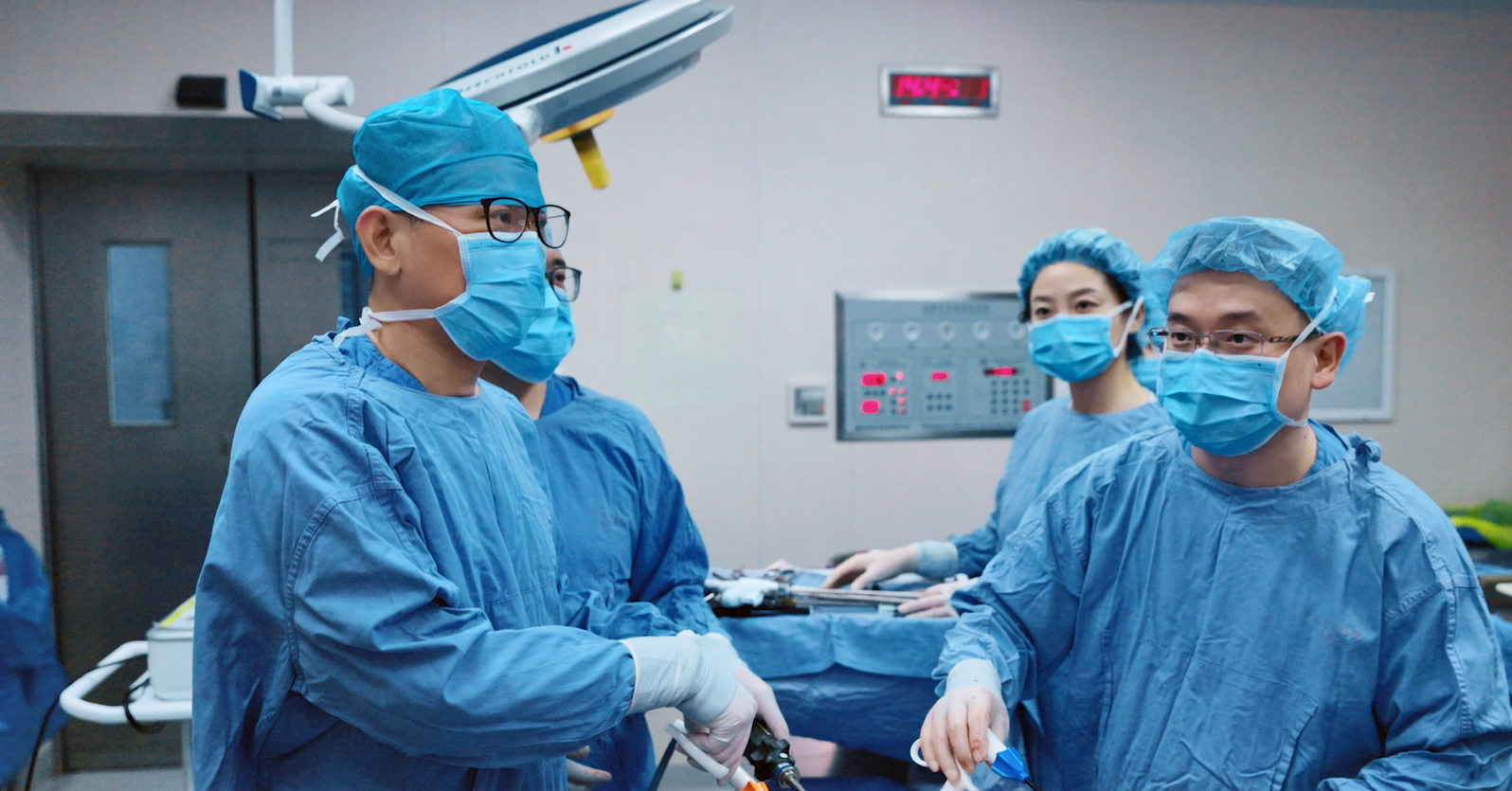
Following a multidisciplinary team (MDT) consultation, the team opted for a strategy of minimally invasive surgical resection followed by adjuvant chemotherapy. In late February 2025, Ms. Wu underwent a laparoscopic radical distal pancreatectomy with splenectomy, including regional lymphadenectomy. Three weeks post-surgery, the team initiated an adjuvant chemotherapy regimen comprising irinotecan and oxaliplatin (FOLFIRINOX-based).
This year, Ms. Wu has surpassed her first postoperative anniversary. She enjoys an active lifestyle, participates in square dancing, and maintains a good quality of life.
When Surgery Is Not Initially Feasible – Is There Still Hope?
Surgical resection remains the cornerstone of curative treatment for pancreatic cancer. However, what happens when a patient presents at initial diagnosis with locally advanced disease that precludes upfront surgery?
In May 2025, 53-year-old Ms. Sheng (not her real name), accompanied by her family, visited Professor Yu Hong’s outpatient clinic.
Like Ms. Wu, Ms. Sheng had been diagnosed incidentally during an asymptomatic health screening that revealed a pancreatic mass. However, unlike the previous case, a meticulous review of imaging studies confirmed that the tumor had invaded adjacent major vascular structures, thereby precluding immediate surgical resection. This news was devastating for Ms. Sheng and her family.
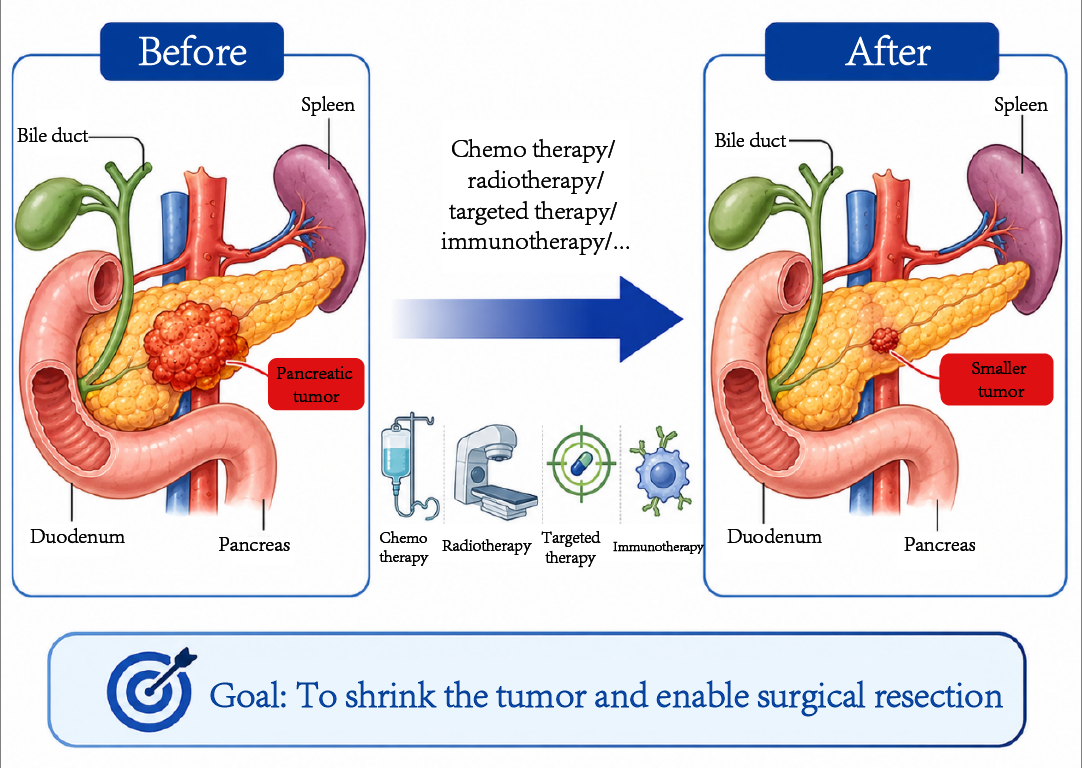
Nevertheless, the team did not concede defeat. Following an MDT discussion, the team rapidly devised a preoperative therapy regimen. The goal was to downstage the tumor and suppress its biological activity through systemic therapy, thereby potentially restoring surgical resectability.
After four cycles of induction therapy, a turning point emerged: the tumor had shrunk significantly, creating a safe clearance plane from the adjacent great vessels. Subsequently, the patient successfully underwent a laparoscopic pancreaticoduodenectomy (Whipple procedure).
Today, under regular follow-up, Ms. Sheng has returned to her normal daily life.
These two cases underscore that even for pancreatic cancer – a disease long feared for its aggressiveness – a multidisciplinary, evidence-based approach incorporating neoadjuvant therapy, minimally invasive techniques, and tailored adjuvant chemotherapy can offer tangible hope and extended survival for appropriately selected patients.