July.10,2026
Pancreatic Cancer: Often Diagnosed Late, But Not Always a Dead End
Read More→


 July.28,2026
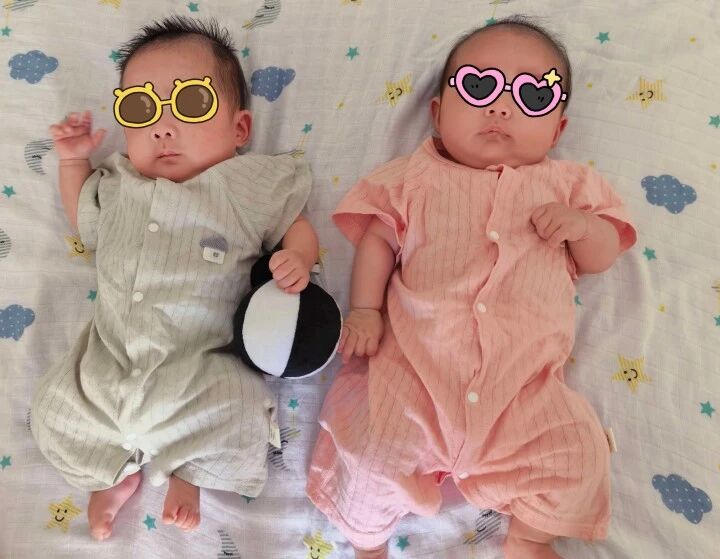
“Now the babies are cooing and reaching out for cuddles—every day brings something new.” As she spoke of her premature twins, Ms. Zou (not her real name)’s voice softened with tenderness.
Her twins were born prematurely, and in their first 52 days of life, they confronted nearly every challenge a premature infant can face. From their extremely low birth weights of just 1,170 grams and 1,590 grams, to their safe return home, it took 52 days of round-the-clock dedication. A multidisciplinary team of doctors and nurses at Sir Run Run Shaw Hospital affiliated with Zhejiang University School of Medicine (SRRSH) worked in seamless relay to help the twins overcome each critical hurdle and recover enough to be discharged. The parents handwrote three thank-you letters. “The happiness and contentment we feel today were hard-won by the medical team. Without them, our little family would not be so complete,” Ms. Zou reflected.
Smooth IVF Journey: Success on the First Try
Ms. Zou and her husband were both over 30 when they married. After over a year of trying to conceive without success, and given that Ms. Zou was 35, her doctor recommended IVF. After comparing several options, the couple chose SRRSH for the procedure and consulted with Senior Consultant Dr. Fei Xiaoyang of the Reproductive Medicine Center. “All the tests went smoothly, the preparation process was seamless, and the hospital's procedures were very patient-friendly.” In August of last year, the doctors informed Ms. Zou that she was ready for embryo transfer. By mid-September, the embryos had successfully implanted, and Ms. Zou was pregnant—with twins. “I never imagined we would be so lucky, so smooth—success on the very first try." Ms. Zou was overjoyed; she had braced herself for a long battle. "During the IVF process, I saw many couples experience repeated failures, with tears and breakdowns. I feared I might face the same struggles.”
A Bumpy Pregnancy: Severe Morning Sickness and Gallbladder Conditions
The joy of carrying twins lasted barely a week before severe pregnancy reactions set in. “I threw up everything I ate.” In mid-November, Ms. Zou went for a routine prenatal checkup at SRRSH’s Qingchun Campus, where she was seen by Senior Consultant Dr. Yang Jingyan of the Obstetrics and Gynecology Department. The test results led to her being immediately admitted: pregnancy with ketone bodies at 3+, suggestive of ketoacidosis, which could affect fetal development. The doctors advised prompt hospitalization. Since the couple lived near SRRSH’s Grand Canal Campus, Ms. Zou was admitted to the maternity ward there that same day. The campus’s obstetrics team is highly skilled and clinically experienced, offering full-spectrum care from prenatal checkups and delivery support to postpartum rehabilitation. After a week of attentive care and treatment, Ms. Zou’s relevant indicators returned to normal, but she still had little appetite. Before discharge, the hospital’s Clinical Nutrition Department provided dietary recommendations, and the Endocrinology and Metabolism Department initiated daily injections. After discharge, the pregnancy reactions persisted—and new problems emerged. In January, Ms. Zou was struck by sudden, unbearable abdominal pain. After emergency treatment at the Grand Canal Campus, she was readmitted to the maternity ward. “During that hospitalization, there were other women in the ward on bed rest to prevent miscarriage, and they tried so hard to eat well. Seeing their determination, I told myself I had to eat properly and do everything to protect the babies,” Ms. Zou recalled.
Risk of Fetal Demise: Emergency C-Section Required
Hopes were high, but reality proved harsh. In February, a prenatal checkup revealed that Ms. Zou had a short cervix. Given that she was carrying twins, the doctors immediately advised more frequent checkups and close monitoring of fetal development. “The babies’ growth was a bit slow—especially the lower one, which showed more pronounced signs.” After one checkup, Senior Consultant Dr. Yang Jingyan’s words sent the entire family into a spiral of anxiety. At 29 weeks of gestation, Ms. Zou was hospitalized again. The medical team administered tocolytic therapy to promote fetal lung maturation, doing everything possible to buy the babies more time for growth and development. After two weeks of targeted tocolytic treatment and multiple ultrasound monitoring sessions, fetal development still fell short of expectations, and a congenital heart issue was detected. More alarmingly, one of the fetuses showed abnormal umbilical blood flow, posing a risk of intrauterine demise at any moment. “We need to perform a cesarean section as soon as possible. Given the current situation, it’s questionable whether the higher-risk fetus can safely remain in the womb. If we deliver now, there is a chance to fight for the baby’s survival. If fetal demise occurs, that chance will be lost.” Upon hearing this, Ms. Zou’s family was stunned. While Ms. Zou emotionally struggled, Dr. Yang Jingyan's team and the head nurse offered continuous reassurance and carefully weighed the pros and cons. To ease Ms. Zou’s mind, they also coordinated with Dr. Jiang Zhou’s neonatal team to ensure that emergency care would be ready for the babies after birth. After tears, despair, and heartbreak, Ms. Zou eventually regained her composure, steeled herself, and fully cooperated with the treatment plan. Finally, on the first day of the 32nd week of gestation, Dr. Yang Jingyan successfully performed the cesarean section.
1,170 Grams and 1,590 Grams: Both Admitted to the NICU at Birth
On March 30, 2026, two tiny lives entered the world—a boy and a girl. Heartbreakingly, the boy weighed just 1,170 grams at birth, and the girl only 1,590 grams—a combined weight of less than 3 kilograms. From their very first breath, the babies captured the hearts of every medical staff member. The boy was born with neonatal respiratory distress syndrome; the neonatal team, already on standby, immediately initiated emergency treatment, continuously monitoring vital signs and providing targeted care. “Our son was taken to a nearby table for emergency treatment right after delivery. It felt like forever before we heard his first cry—then he was quickly bundled off to the NICU,” Ms. Zou recalled. The girl fared somewhat better. “The nurse brought her over and pressed her warm little head against my cheek. In that moment, all I felt was the joy of becoming a mother for the first time.” Shortly after, the girl was also transferred to the NICU due to the high-risk factors associated with prematurity.
Multiple Critical Condition Notifications: Dreading Nighttime Hospital Calls
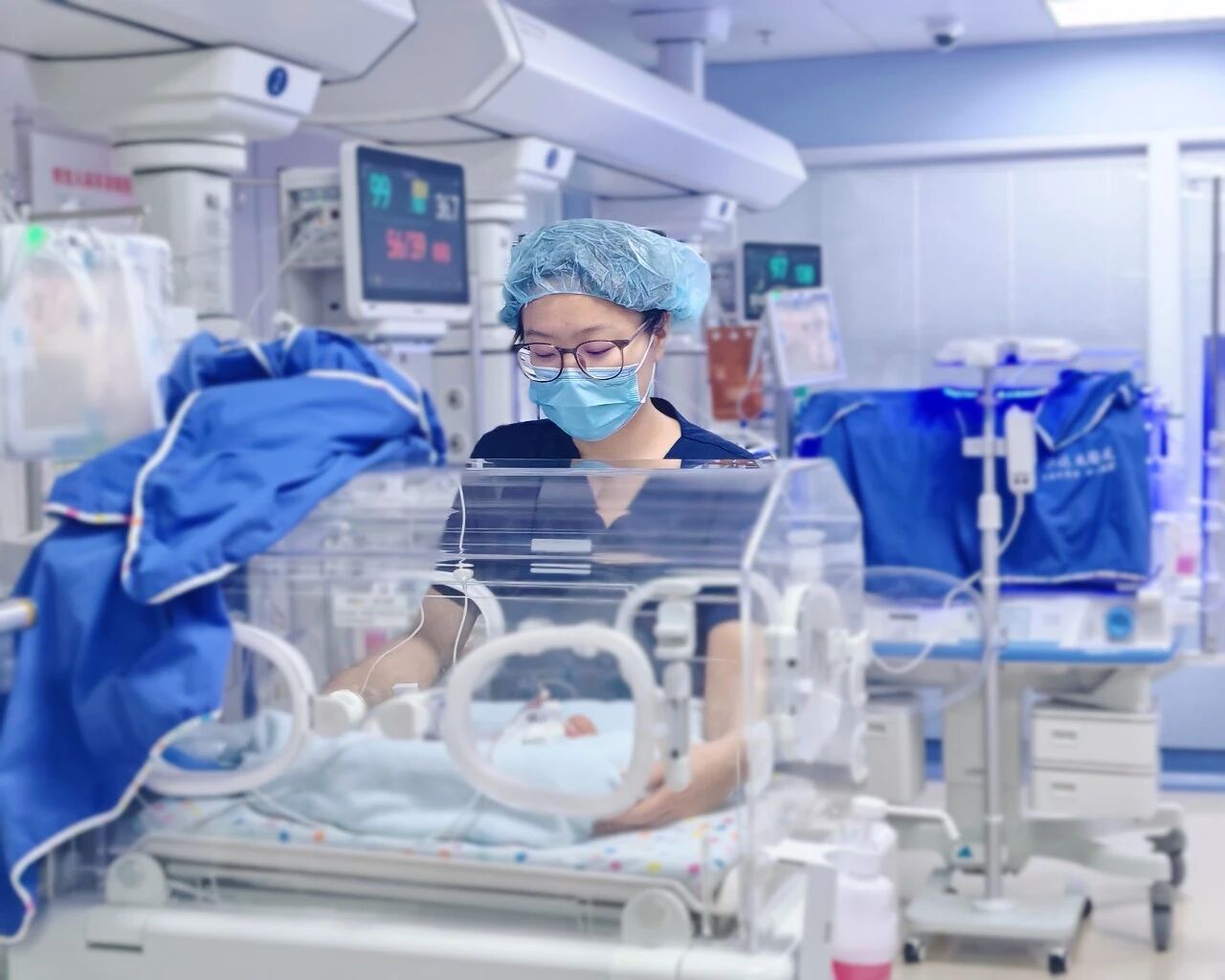
Once in the NICU, both the boy and the girl experienced a cascade of common premature complications: growth retardation, patent ductus arteriosus, anemia, and abdominal bloating requiring fasting. The boy’s condition was particularly severe; immediately after birth, he developed serious infections such as neonatal sepsis. He required invasive mechanical ventilation, followed by non-invasive support, and received multiple critical condition notifications. He also developed bronchopulmonary dysplasia, difficulty weaning off ventilation, and apnea episodes—encompassing nearly all the high-risk conditions associated with prematurity. Recalling those agonizing days, Ms. Zou’s voice choked with emotion. “I cried every single day. The atmosphere at home was unbearably heavy. Most of all, I dreaded nighttime calls from the hospital.” Ms. Zou produced very little breast milk—barely 30 ml per session. The disposable bottles provided by the hospital, with a capacity of 100 ml, were never filled. One evening in April, her milk supply finally exceeded 30 ml; she was delighted that “the babies would have a little more to eat.” Then her phone rang—it was the hospital. “As soon as my husband answered, his face changed.” That night, they lay back-to-back in silence, weighed down by unspoken fears. Only later did Ms. Zou learn that the call had been about her son’s critical deterioration.
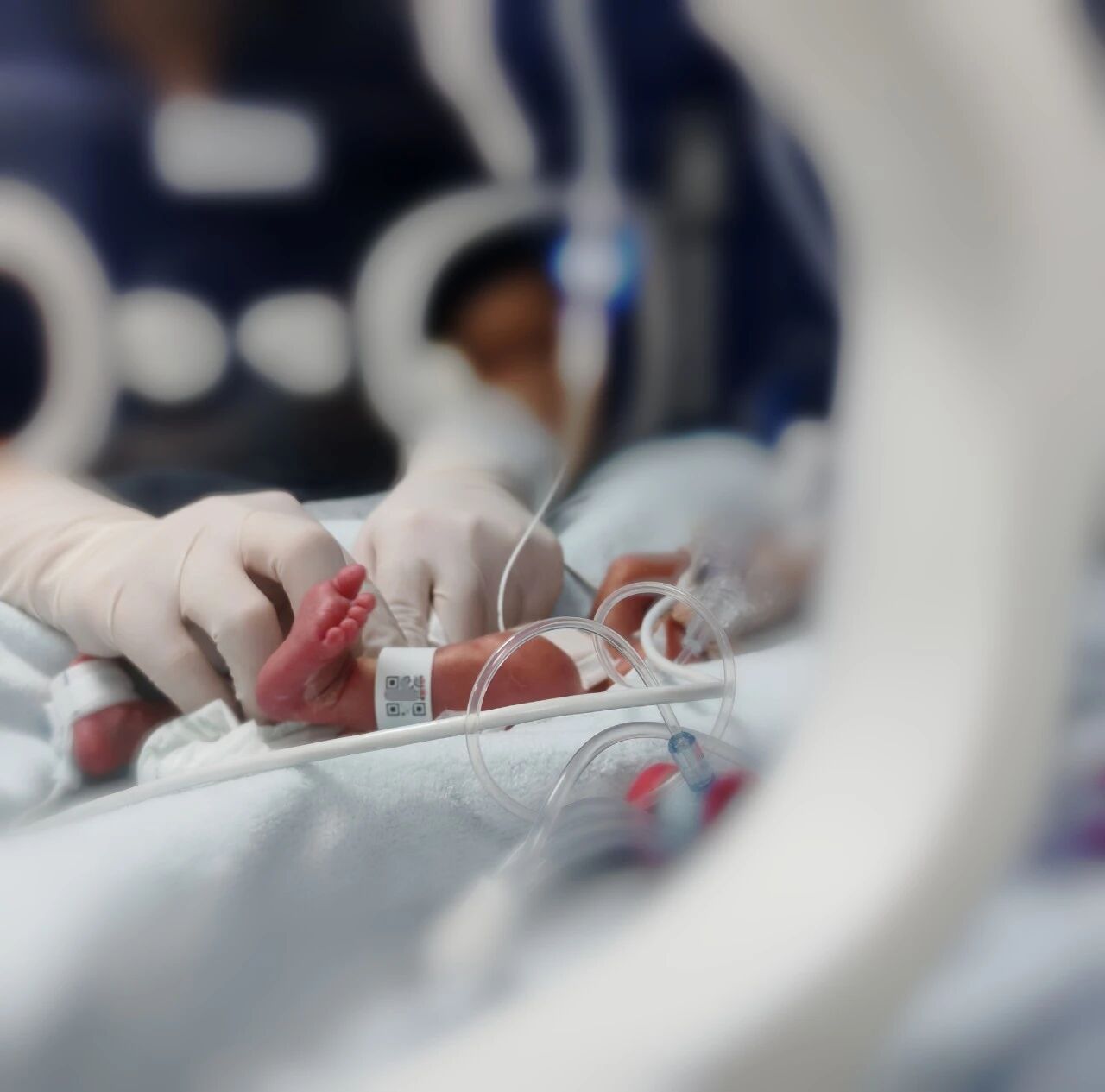
24/7 Monitoring: Holding Up Hope for the Premature Infants
Every day, Ms. Zou’s husband delivered the babies’ “rations” to the hospital. “Today, the little boy drank an extra 1 ml!” “The little girl was especially good today!” During each handover, the nurses would share small updates about the babies’ progress. Once a week, the hospital offered a NICU visitation opportunity. Ms. Zou first saw her twins on their 35th day of life. After disinfecting, donning protective gowns, and passing through two sets of doors into the NICU, she finally laid eyes on her son and daughter. After 35 days of intensive care and tender nurturing, the girl was breathing on her own. “Her incubator was by the window, like a ‘room with a view.’ When I saw her that day, the little one was full, staring out the window with wide eyes, occasionally kicking her little legs and waving her tiny hands.” The boy was still undergoing treatment—tubes and lines still attached to his tiny body—but all his vital signs had trended toward improvement. Under the leadership of Senior Consultant Dr. Jiang Zhou, the team cared for both babies with extraordinary dedication. Around the clock, they monitored the infants’ respiratory rhythms, adjusted ventilator parameters dynamically, auscultated bowel sounds daily to fine-tune milliliter-by-milliliter feeding volumes, and used “nesting” care to recreate the warmth of the womb, helping the babies feel secure and reducing agitation in their gentle cocoons. Every incremental gain—an extra milliliter of milk, a step down from invasive to non-invasive respiratory support—was communicated back to the family promptly. Through systematic, professional treatment and meticulous, compassionate nursing, both twins steadily improved. “When the doctors told me I could do ‘kangaroo care’ with my daughter, words could not express my excitement. The first time I held her skin-to-skin, with her soft little body on my chest, tears just flowed.” One detail stood out for Ms. Zou: “On the day of kangaroo care, she was fussier than usual. When I arrived at the hospital, I saw a nurse holding my whimpering baby, softly soothing her—just as she would with her own child.”
Three Handwritten Letters: A Testament to a Heartwarming Doctor-Patient Bond
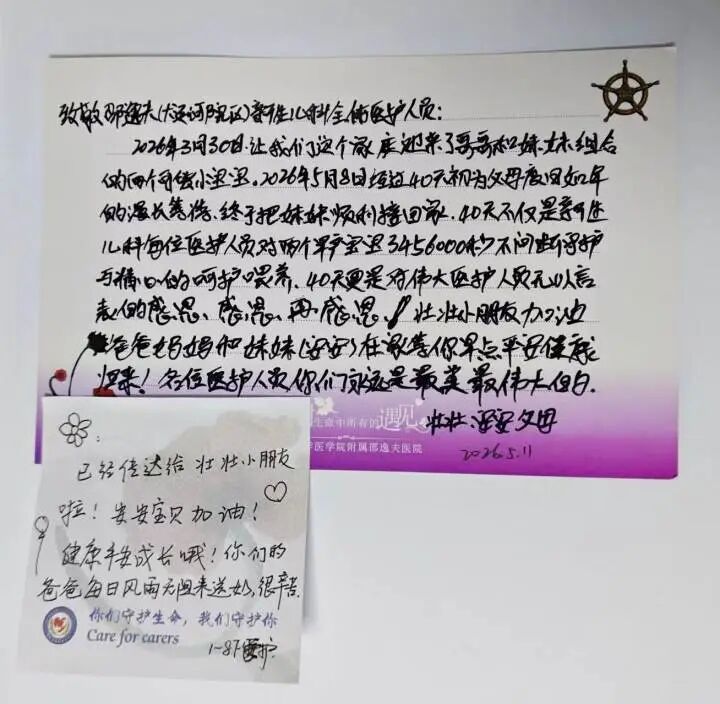
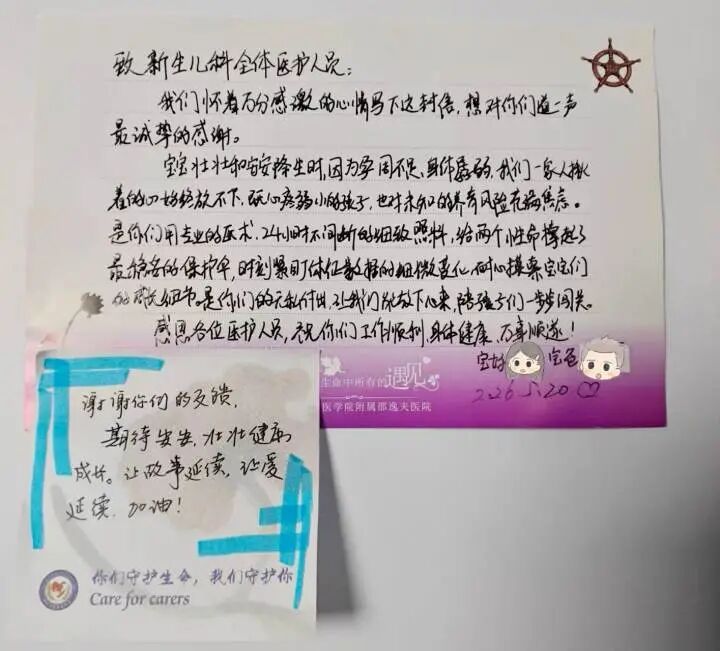
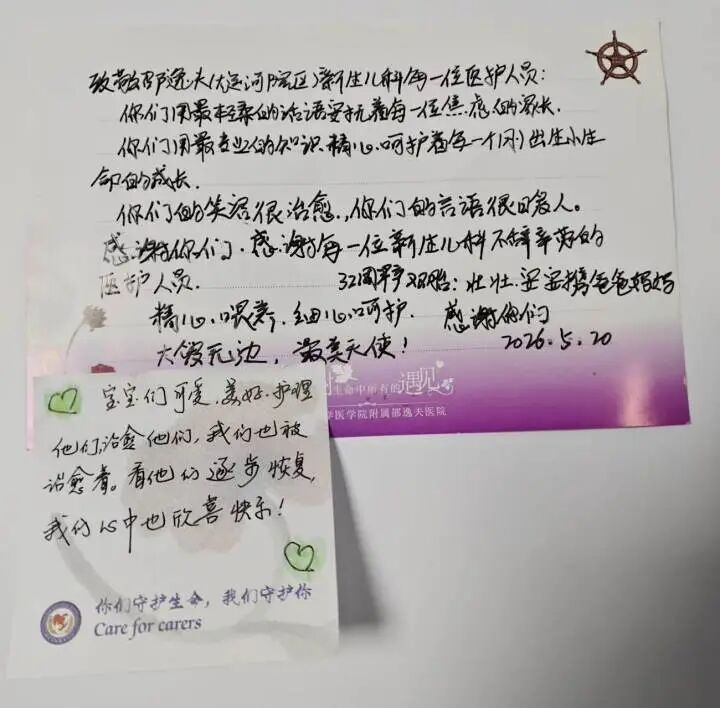
At last, hope began to brighten. At 40 days of hospitalization, the girl was discharged first. Before she left, the medical team encouraged Ms. Zou: “Take good care of your little girl at home—and soon you’ll be ready to welcome your son back.” At 52 days, the boy was also cleared for discharge. “Your son will need even more attentive care—make sure his daily needs are well met,” the nurses kindly reminded them before discharge. On May 20, the family of four was finally reunited. After the twins were born, Ms. Zou and her husband had already chosen nicknames for them: the boy, Zhuangzhuang (meaning “strong and healthy”), and the girl, An’an (meaning “safe and peaceful”). Upon discharge, Ms. Zou and her husband wrote three thank-you letters by hand and quietly posted them on the NICU’s gratitude wall. Movingly, below each letter, the medical staff had left sincere replies. Though the letters were brief, they carried profound emotion. The 52-day vigil and the mutual devotion between family and caregivers are deeply moving. “May you weather every storm, and may the rest of your days be smooth and bright.” Wishing little Zhuangzhuang and An'an a lifetime of health and happiness!